AI integration in Lausanne
Adding artificial intelligence to an existing application, automating document processing or running an open source model on servers in Switzerland: we integrate AI where it brings a concrete gain, with the team that already builds and hosts your projects.
What AI can do in your projects
-
Document analysis
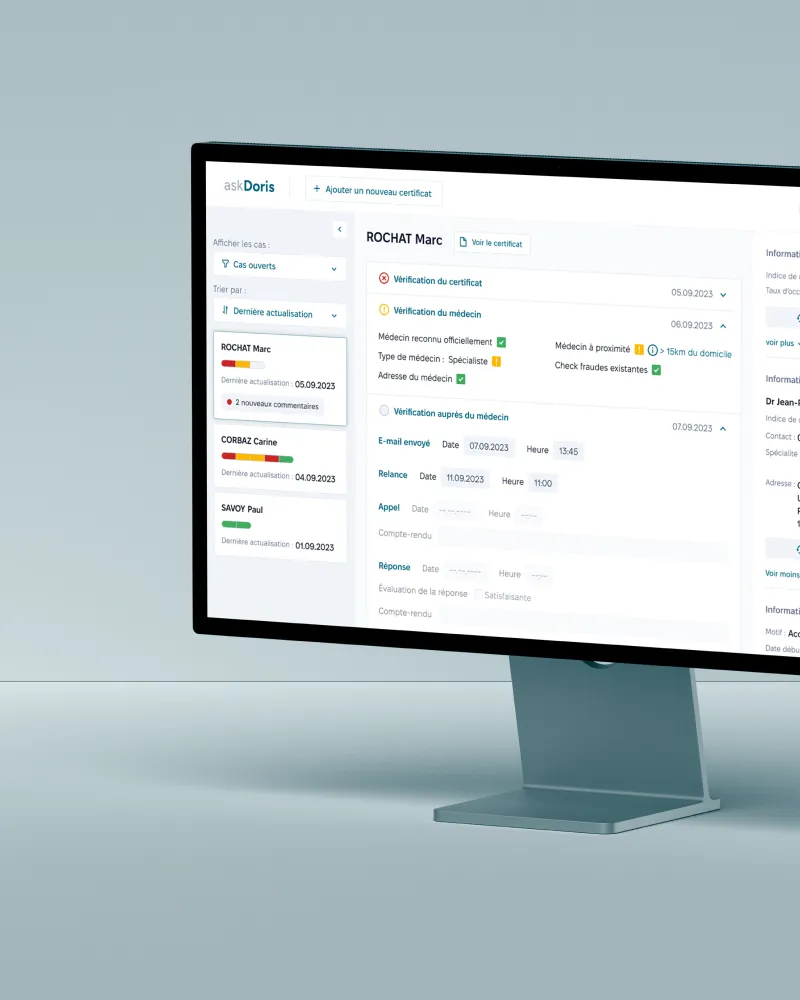
Extracting and checking information in PDFs, forms or certificates. This is the core of askDoris, which checks the compliance of medical certificates.
-
Assistants on your data
An assistant that answers from your documents, knowledge base or catalogue, and cites its sources.
-
AI in an existing application
Summaries, automatic classification, assisted writing or natural-language search added to your Laravel, Drupal or mobile application, without a rebuild.
-
Process automation
Sorting incoming requests, pre-filling forms, generating reports: AI takes over repetitive tasks, your teams validate.
-
Analysis and recommendation
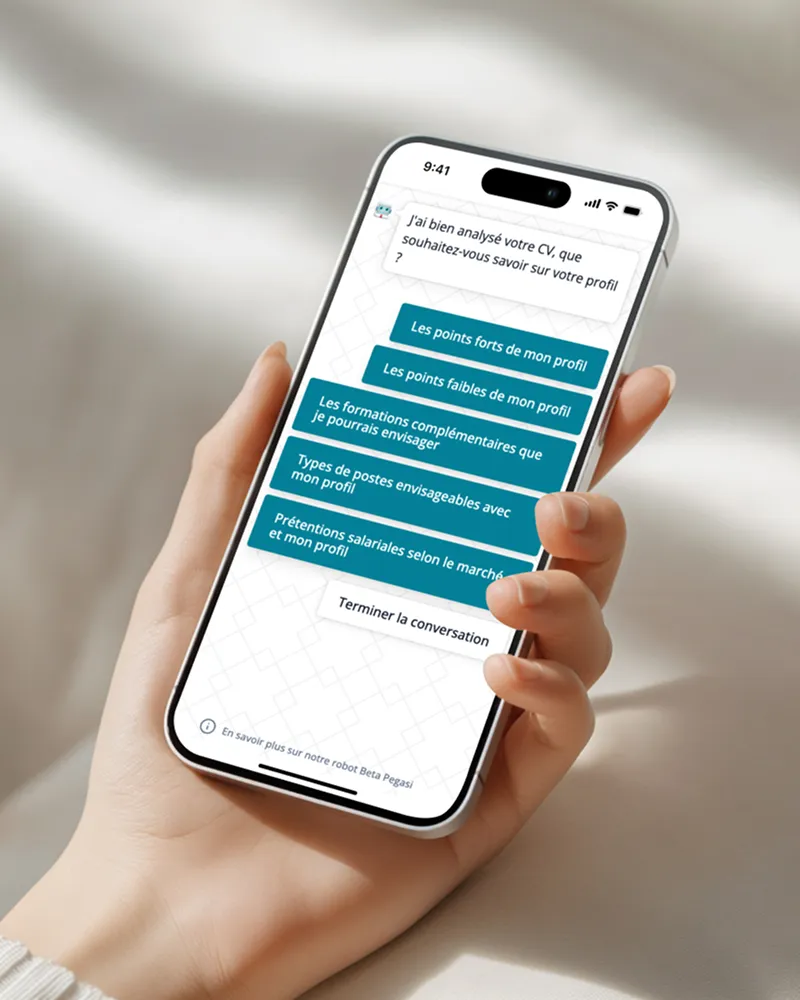
Assessing a profile or a file and suggesting the next step. Beta Pegasi, our HR robot, analyses CVs and suggests the job offers that match the profile.
-
Connecting AI assistants
Making your data and actions available to assistants such as Claude or ChatGPT through the Model Context Protocol (MCP), with controlled access.
The right model for your data
-
Open source models
Llama, Mistral or Qwen, deployed on servers in Switzerland or on your own infrastructure. Your data stays in the country and trains no other model.
-
Major provider APIs
Mistral AI, OpenAI or Anthropic (Claude) when the task needs the most capable models, with business plans that do not use your data for training.
-
A hybrid approach
An open source model for sensitive data, an API for the rest: we combine them based on confidentiality, cost and expected quality.
The tools we use every day
- Mistral
- OpenAI
- Claude
- Llama
- Qwen
- Ollama
- vLLM
- RAG
- Embeddings
- MCP
- Laravel
- Python
How we work
-
Discovery
A first meeting, at our office or by video call, to understand your needs, constraints and budget.
-
Design
Specifications, mockups and technical architecture agreed with you before the first line of code is written.
-
Iterative development
Regular deliveries on a staging environment, so you can follow progress and adjust priorities along the way.
-
Launch and follow-up
Deployment, onboarding of your teams, then maintenance and new features over time.
A team in Lausanne, not a remote contractor
-
People who speak your language
You talk in French or English with the people who build your project, in your time zone.
-
Real meetings
Our office is in Lausanne. We work with companies and institutions across French-speaking Switzerland, including Geneva.
-
A team rather than a single person
Development, design, SEO and hosting under one roof: your project does not depend on a single developer.
Frequently asked questions
Does our data stay confidential?
It is the first thing we settle. For sensitive data, we favour open source models hosted in Switzerland or on your premises. With an external API, we choose plans that do not use your data for training and limit what is sent, taking the Swiss data protection act (nFADP) into account.
Open source or ChatGPT: which should I choose?
Recent open source models are enough for many tasks: classification, extraction, summaries, search in your documents. Commercial models remain stronger for complex reasoning. We test both on your real cases before recommending one.
Can AI be added to an existing application?
Yes, that is the most common case. AI is added as a feature of your Laravel, Drupal or mobile application, without rebuilding it.
How much does an AI integration project cost?
The budget depends on the use case and the chosen model. We often start with a prototype on a limited scope, to measure the real gain before going further. Running costs, API or servers, are estimated from the start.
Can AI make mistakes?
Yes. That is why we keep a human validation step where a mistake is costly, show the sources of answers and measure quality on real examples before going live.